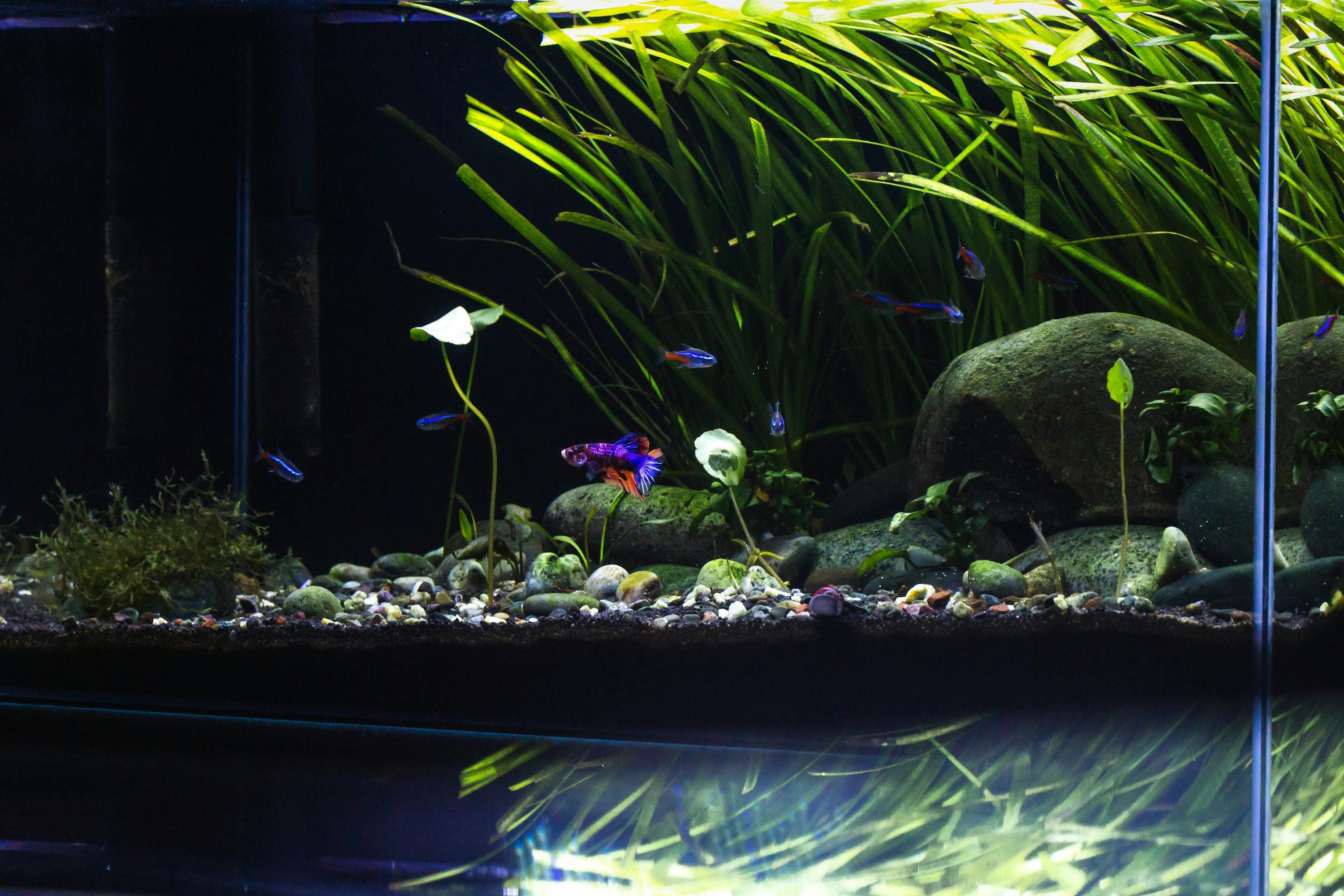
The most useful first aquascaping tank is not necessarily the smallest or the most dramatic. It is one you can light, filter, reach into and maintain consistently. Aquascaping combines a planted underwater composition with a living system, so the container has to work for both. Before buying glass, decide where the aquarium will stand, how you will change its water and whether it will house animals. Those practical answers should come before a shopping list of rocks, wood and demanding plants.
A conventional rectangular aquarium around 60 centimeters long is a sensible starting point to consider, not a universal rule. Specialist beginner guidance from Gensou recommends that format as a balance between useful water volume and manageable upkeep. A broad front-to-back footprint gives you more freedom to separate foreground planting from taller growth, while a familiar tank shape makes it easier to compare compatible lights and filters. Check actual dimensions and equipment access rather than relying on a product photograph or the volume printed on the box.
A shallow aquarium can make planting and trimming easier to reach, but its proportions are a design choice rather than an automatic beginner advantage. Likewise, a compact cube may fit a particular space without being the easiest container for every layout. Compare the usable footprint, the planned plant heights and the room needed by filter pipes or a lid. If you intend to keep fish, choose the aquarium around the adult animals' requirements rather than adding them to whatever display happens to look attractive.

Filtration and water testing are part of the tank choice, not optional finishing touches. The RSPCA explains that fish waste produces ammonia, and that biological filtration relies on bacteria that convert ammonia to nitrite and then nitrate. Clear-looking water does not prove that water is safe. Establish a suitable biological filter before adding fish, and use ammonia and nitrite tests rather than guessing from appearance. Plants and decorative hardscape do not remove the need for species-appropriate water conditions and a properly maintained filter.
Keep the first layout simple enough that you can learn from it. Tropica's guidance stresses water circulation and water changes, especially during start-up, when a new aquarium is more vulnerable to imbalance. Leave access to clean the glass, remove debris and prune growth without dismantling the scene. A tank that looks easy to place on a shelf may still be awkward to maintain; the useful choice is a planted landscape you can keep healthy over time.
- aquascaping
- aquariums
- beginner guide
Responses
No responses yet.